

How To Clean Fiberglass Pool Stains
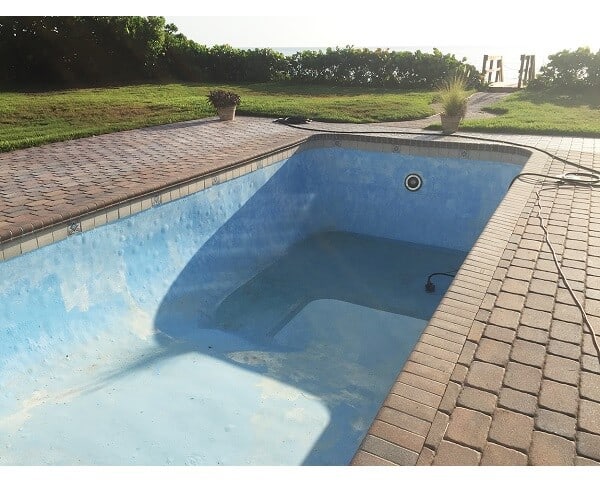
En Ok Pool Reform within the section of clean pool we present you an article about: Stains in fiberglass pools
Fiberglass Pools Will Always Stain

Benefits in the ease of maintenance of the fiberglass pool
A fiberglass pool is the easiest to maintain due to its smooth, easy-to-clean, and algae-resistant surface.
However, when general cleaning and chemical levels, especially chlorine, pH, and calcium hardness, are not properly maintained, it is easy to find organic and inorganic stains in a fiberglass pool.
TIP: Clean pool stains as quickly as possible
- Pool stains should be cleaned up right away as they become stubborn and difficult to remove when left unattended for a long time.
- It is recommended that you first use household products, such as soap and water, to remove stains, as they contain mild chemicals that are kind to pool surfaces.
- Only proceed to other solutions when the easier one proves ineffective.
Types of stains in fiberglass pools

Types of organic stains for swimming pools
Types of stains in the metal-based pool
How to get rid of organic stains in swimming pools

For organic stains in swimming pools
Organic stains are best resolved by chlorinating the water and brushing; However, these types of stains sometimes disappear only by brushing.
Tratamiento de manchas orgánicas en la piscina
- First of all, we must check that the chemical values of the pool water are correct.
- If not, at least we must guarantee the pH balance (ideal value between 7,4-7,69 and alkalinity (between 100 and 150 ppm).
- Next, we will proceed to perform a shock treatment to the pool
- And, as always when we do a treatment in the pool, we will leave the filtration in minimum setting, which amounts to a filtration cycle (between 4-6 hours is usual depending on the equipment and type of pool); although it is advisable to let the water recirculate between 12-24 hours.
- Therefore, once the pool has received the shock chlorination dose, we will completely brush all the stains.
- Regardless, we should continue to brush the stains intermittently while keeping the chlorine level high until the stains are completely gone.
- Finally, by way of clarification, we will not turn off the pool filtration until we stop adding chlorine and until the purifier has had time to recirculate all the pool water until the last time we have added product.
In case the shock treatment to remove organic stains does not work
In the event that brushing the pool and chlorinating the coke has not had an effect, we must rub the pool with a specific product that we can find in a pool store.
On the other hand, if at most, within a period of two months, we have not found a solution to make the stain disappear, we recommend that a swimming pool professional advise you on the spot.
How to remove rust stains in fiberglass pools
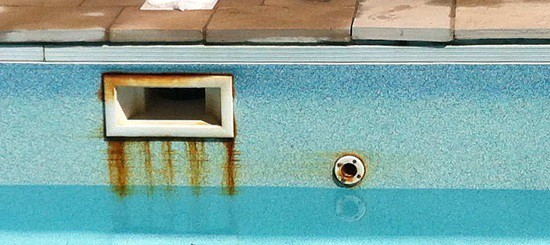
Get rid of metal stains in swimming pools
Horrible rust stains on the surface of your fiberglass pool can detract from its appeal and while they can be a bit more difficult to remove, they are not impossible.
What contributes to the appearance of metal stains in fiberglass pools
Mineral deposits and the decomposition of metals contribute to these unattractive stains and, as we have already mentioned, although stains of this nature present some difficulty, they are not at all impossible to resolve.
Type of treatment for fiber pool rust stains

Brown stains in and around the fiberglass pool
Scrubbing rust stains with a bleach tablet can often remove the stain effectively. This is particularly true for brown stains in and around the pool, which is an indication of iron accumulation. If the stain is turquoise, copper causes it and a tile cleaner will likely remove the stain.
Remove rust stains
For rust, apply a vitamin C tablet directly to the stain until it clears. If it is caused by metal, it will usually dissolve quickly, but you can use a soft bristle brush to remove excess rust.
Rust infection spread throughout the pool
When you have a rust infection spread throughout the pool, put ascorbic acid powder on your pool filter. Follow the manufacturer's specifications for best results.
Another way to dissolve rust is to rub bleach tablets on the affected areas. Retest your soft bristle brush on stubborn and excessive stains.
Procedure to remove rust stains in fiberglass pools
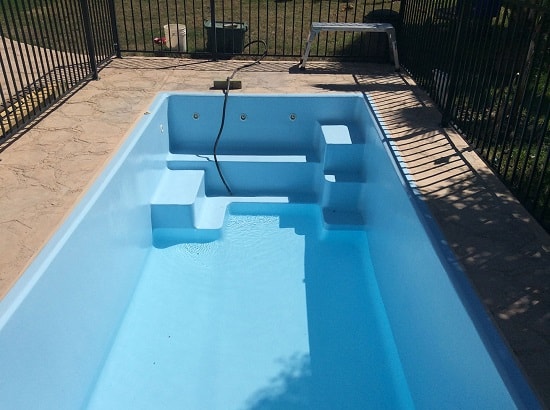
Step 1 to remove brown stains in fiberglass pool
- Apply a vitamin C tablet directly to the stain.
- If the stain is due to metal, it will come off quickly. Scrub the affected area with the soft bristle brush to remove the stain.
Step 2 to remove brown stains in fiberglass pool
- Apply ascorbic acid powder to your pool filter, according to the manufacturer's specifications.
- This is helpful if multiple stains are scattered throughout the pool.
Step 3 to remove brown stains in fiberglass pool
- Scrape a bleach tablet over the stained area to lighten the stain.
- Scrub the area with a soft bristle brush to help remove the stain.
- If you cannot easily reach the spot to scrub it, tape the tablet to the end of a telescopic pole. Don't rub too hard or you may damage the fiberglass surface.
Step 4 to remove brown stains in fiberglass pool
- Remove turquoise stains caused by copper by scrubbing them with a tile cleaner.
- After cleaning, treat the water with chelating or sequestering pool chemicals designed to remove copper stains.
- Follow the chemical manufacturer's directions for specific amounts to add based on the size of your pool.
- Ultimately, these products make the copper left in the pool caked so that you can remove it by cleaning or filtering the water.
How to remove other stains in fiberglass pools

Generic treatment to remove stains in fiberglass pools
- Use a soft cloth / sponge and specific products for fiberglass pools.
- Using harsh chemicals or harsh tools could damage the gelcoat.
- If the stain remains, the next step depends on the source: the type of stain.
Remove light stains from bath rings
- Commercial products like Off the Wall, Jack's Magic Blue Stuff, and pool tile cleaners can remove light bath rings found around the pool.
- You can also apply a vinyl cleaner or non-abrasive tile cleaner that is not originally designed for pool use.
- Be careful with these and be sure to test them in an inconspicuous area first in case they have a damaging effect on your fiberglass.
- Another way to remove light stains is to rub the affected area with a sponge, soap, and warm water.
- You can also use liquid dish detergent as an alternative to soap.
- Whichever you choose, rinse the area thoroughly afterward so you don't end up with suds in your pool water.
Remove heavy stains from bath rings
- Wearing gloves, pour oxalic acid into the water to remove heavy stains from the bath rings.
- The water may appear cloudy for a few days after treatment, but you can run the pool filter to clean it before adding chlorine.
- Follow the manufacturer's specifications for the proper amount of chlorine for the size of your pool.
- Also, make sure the pH balance of the water is 7.5 when the pool filter is in use.
- A Mr. Clean Magic Eraser is another effective product for heavy ring stains.
- Rub the affected area until it clears. The solution in the eraser is smooth and will not damage the surface.
- However, do not use commercial abrasive brushes or cleaners to remove these stains as they can damage your pool.
Remove non-organic stains
- Metal stains The easiest route is to rub a vitamin C tablet directly onto the stain. This works best with small spots.
- Electrolysis frees the metal from the surface of the pool.
- Then you will add the appropriate metal sequestering agent to, well, sequester the metal.
To remove large non-organic stains
- For a large stain, you can level up to ascorbic acid: Lower the chlorine to 0.0 ppm and the pH to 7.2.
- Run the filter and add ascorbic acid to the water.
- After 24 hours, rebalance the water chemistry. Add the sequestering agent to the water.
Calcium scale
- You can remove calcium carbonate with a stain eraser (for fast results) or a fiberglass pool-friendly flaking treatment (added to water, with slower progress).
- Calcium silicate is a more difficult row to remove. You will need that pool scaling treatment.
How to clean fiberglass waterline stains
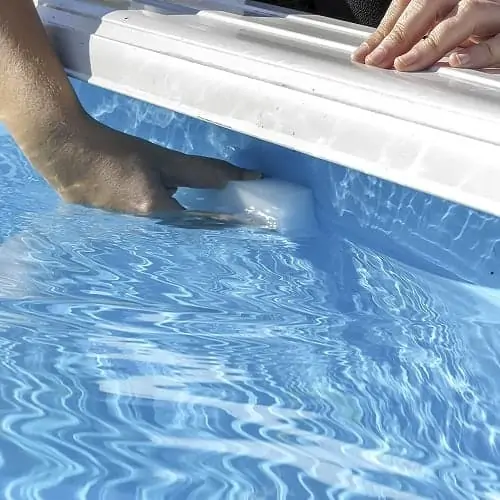
Cleaning a fiberglass pool along the waterline
Cleaning a fiberglass pool along the waterline essentially means getting rid of the ring around the pool.
The ring forms due to metals found naturally in water, combined with body oils and sunscreen products that have been exposed to water.
How to get rid of the ring around the pool
You can get rid of this ring by adjusting your pool filter settings to make it run faster than normal. Once you've run the filter and the water is clear, you can add more chlorine. This cleans dirt from the water and disinfects it. Make sure the filtration setting remains at 7.2 so the water is safe to swim in, even during the cleaning process.
Specific products for cleaning the waterline
Some pool vendors offer commercial products that can be used for a thorough cleaning. Non-abrasive vinyl or ceramic tile cleaner can effectively remove stains from fiberglass pools, especially if the pool has light stains and is cleaned regularly, these cleaners can work well.
Oxalic acid also helps remove fiberglass pool stains. However, the substance can cloud pool water for a few days. Pool suppliers also have many industrial products that can be used to clean the pool. Atlantic Pool and Spa has a number of products and methods that will keep your fiberglass pool looking its best.
How to avoid fiberglass stains in the pool

Maintain the water chemistry
- Water balance is important - daily tests can help maintain optimal water balance. It is best to have a pH balance between 7,2 and 7,4 and the total alkalinity should be between 80 and 100 parts per million.
- Keep your chlorine at or above 1 ppm and calcium hardness at 200 to 400 ppm.
- If any of these numbers go out of line, smudges may appear. Simply restoring balance to your pool water universe is the easy way to prevent pool stains.
Clean your pool
- Clean the pool regularly, remove and vacuum dirt, leaves and insect carcasses.
- This helps prevent the waterline from getting stained. Bonus: your water will look prettier.
- Also remove any foreign metal objects.
Products to block water line stains
- To avoid bathtub rings, try Pool Magic, to remove oily dirt from the pool.
- You can also use Comet® Cleaner and a kitchen sponge.
Stain and rust prevention
- To avoid future blemishes in your fiberglass pool, remove all foreign metal objects from the water. Always follow your manufacturer's specifications when adding or putting chemicals in water, and add metal treatment every time you add water to the pool.
- Also periodically check the pH of your pool to keep it at ideal levels.
Dirt stains
- If your fiberglass pool has total dirty opacity, ascorbic acid is a great way to safely acid wash fiberglass surfaces, without draining the pool.
- Follow the directions closely when using ascorbic acid as its pH and alkalinity may need adjustment.
- Stain Free is a natural vitamin C (ascorbic acid) product that gently cleans fiberglass pools.
How to avoid organic stains
- Running your filter system longer and more frequently during the early bathing season while the air is laden with pollen and tree debris will help prevent stains from forming on the fiberglass pool surface.
- In addition to clean water, keep the pool as clean as possible.
- After heavy storms, remove large things carefully, so that the pool cleaner does not drag the sticks.
- Again, proper pool chemical balance and sufficient sanitizer are very important.
- Run the filter system during pollen season and while deciduous trees shed their leaves. This prevents organic matter from settling on the fiberglass pool walls and floors, causing yellowish-green stains. Rub a bleach tablet on any stains that you can't clean with a sponge.
How To Clean Fiberglass Pool Stains
Source: https://okreformapiscina.net/en/limpiar-piscina/manchas-en-piscinas-de-fibra-de-vidrio/
Posted by: christopheralent1991.blogspot.com
0 Response to "How To Clean Fiberglass Pool Stains"
Post a Comment